Appearance and accessories
DV Photo Glasses, Head Coverings and Clothing Rules
Accessories can hide facial features or create shadows. Review them before taking the photo rather than editing them out later.
Reviewed against U.S. Department of State photo guidance · September 14, 2026

More visual examples
These are educational illustrations, not official government examples or photos to submit.
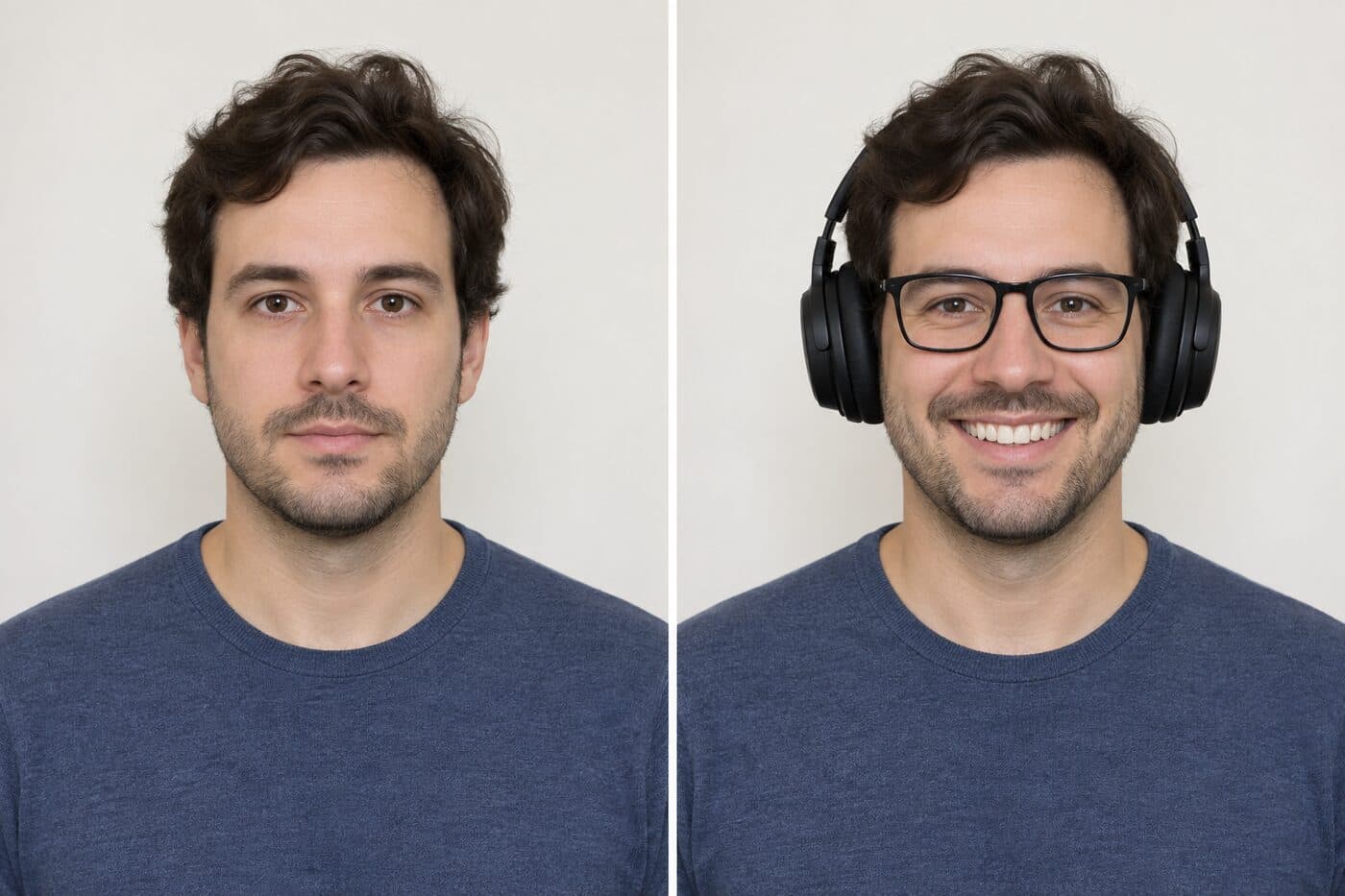
Accessory checklist
| Item | Recommended | Avoid |
|---|---|---|
| Eyeglasses | Remove | Frames or glare |
| Sunglasses | Remove | Tinted lenses |
| Headphones | Remove | Audio devices |
| Religious covering | Full face, no shadow | Covered features |
| Clothing | Ordinary daily clothing | Uniform or camouflage |
On smaller screens, swipe horizontally to see every column.
Remove glasses and audio devices
Take a new photo without eyeglasses, sunglasses or glasses resting on the head. This also avoids glare and frame shadows.
Remove headphones and wireless audio devices. A hearing device normally worn may remain.
Review head coverings carefully
A religious head covering may be acceptable when the full face is visible and the covering casts no facial shadow.
Hair, scarves and fabric should not obscure the eyes or facial outline.
Wear ordinary daily clothing
Avoid uniforms, clothing resembling a uniform and camouflage, except religious clothing worn daily.
Choose simple clothing that remains distinct from the light background.
Important: Check the current program-year instructions; ToolsFA cannot decide whether an exception applies.
Official sources
Always check the instructions for the program year in which you apply. ToolsFA is independent and is not affiliated with the U.S. government.