Lighting and background
DV Lottery Photo Background and Lighting Guide
A white wall can still produce a poor result when a hard shadow, color cast, texture or object remains visible.
Reviewed against U.S. Department of State photo guidance · September 14, 2026
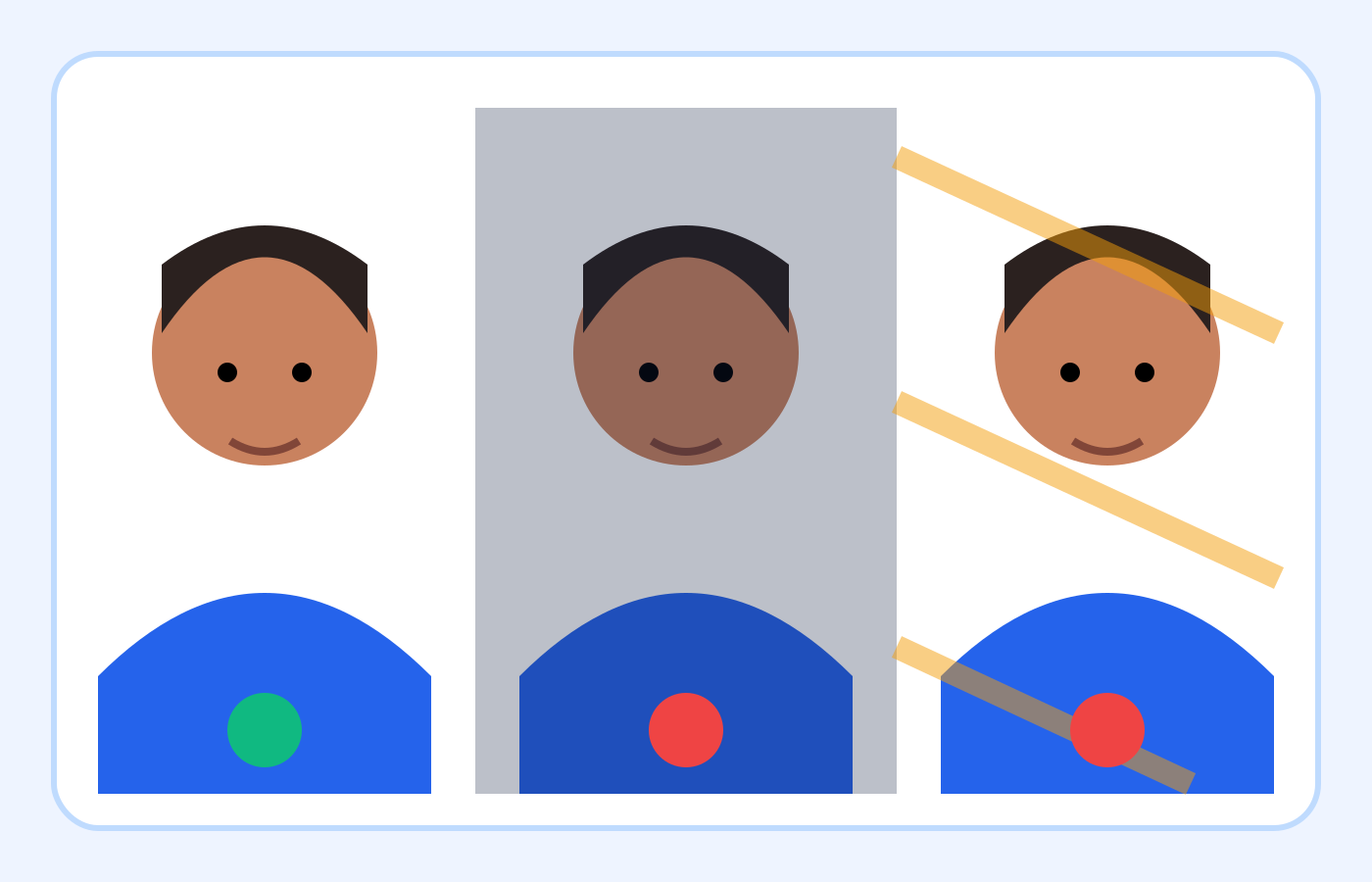
More visual examples
These are educational illustrations, not official government examples or photos to submit.
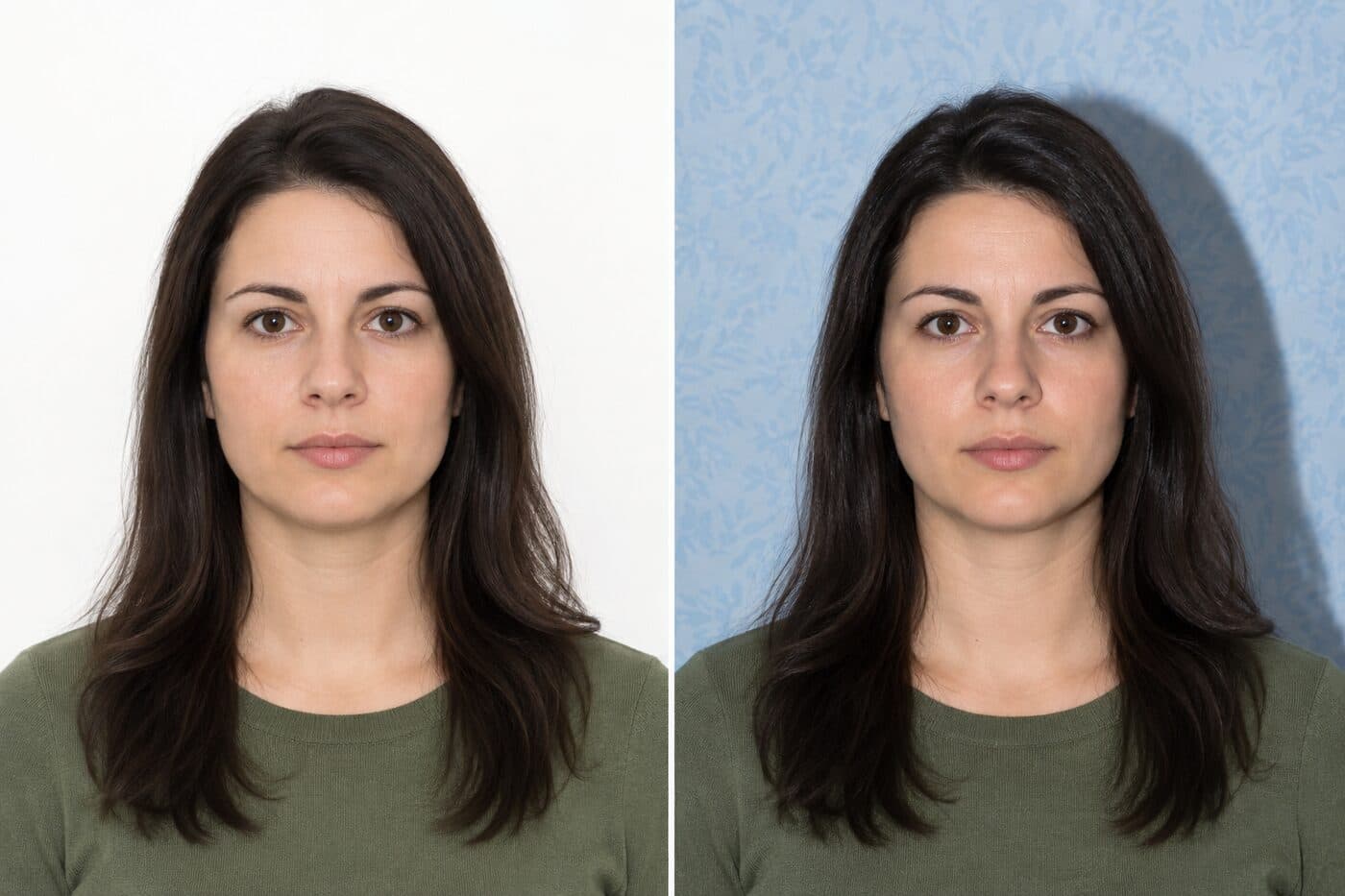
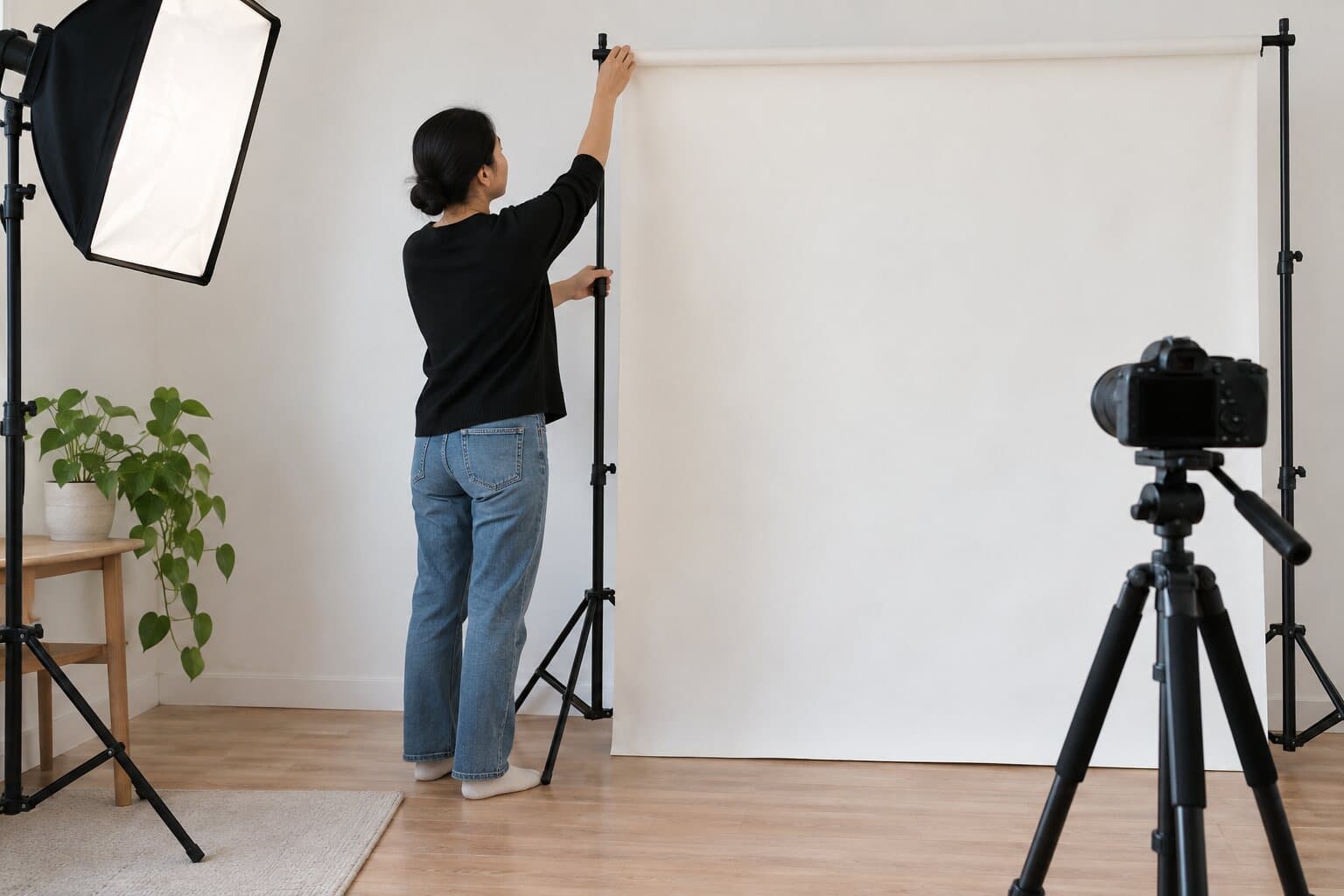
Background and lighting review
| Area | Better | Retake when |
|---|---|---|
| Color | White or off-white | Another color shows |
| Surface | Plain and smooth | Texture or objects |
| Face light | Even | One side is dark |
| Wall shadow | None | Dark outline appears |
| Detail | Natural and clear | Highlights or shadows hide detail |
On smaller screens, swipe horizontally to see every column.
Choose a genuinely plain background
Use a smooth white or off-white wall or backdrop that fills the frame. Remove pictures, doors, seams and furniture.
Check on a larger screen because a phone display can hide subtle color casts and shadows.
Move away from the wall
Standing against the wall makes a dark outline more likely. Move several feet forward when space allows.
Keep the camera and main light in front. A light far to one side creates an uneven face.
Use soft, balanced light
Indirect window light or two similar front lamps can work. Avoid mixed light colors, strong overhead light and hard flash.
- Check both sides of the nose and chin.
- Look for a shadow around hair and shoulders.
- Avoid washed-out highlights.
- Retake instead of replacing the background digitally.
Official sources
Always check the instructions for the program year in which you apply. ToolsFA is independent and is not affiliated with the U.S. government.