PDF merging guide
How to Merge PDF Files in the Correct Order
Merging PDFs is easy; producing a combined document that reads correctly requires a short review of file order, page order, duplicates and orientation.
Published September 13, 2026 · Practical guidance from ToolsFA
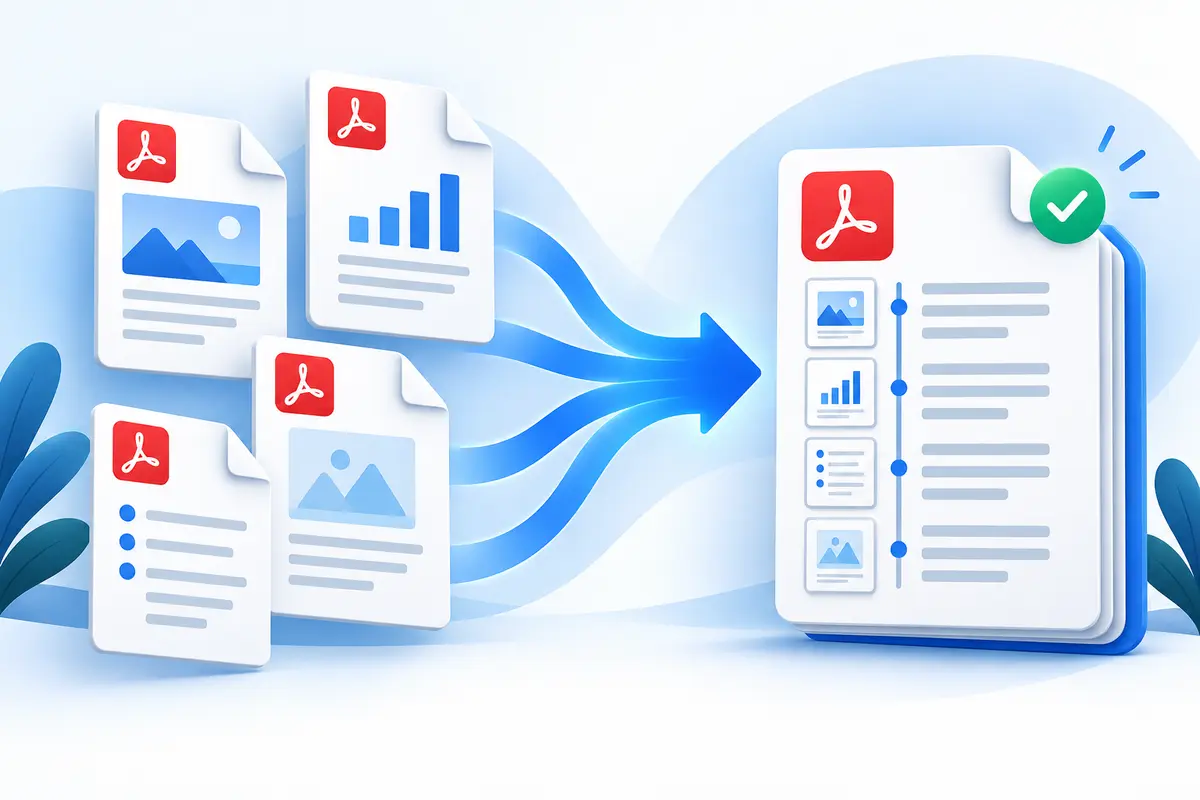
A simple order for common combined PDFs
| Combined document | Suggested sequence | Final check |
|---|---|---|
| Job application | Cover letter, resume, certificates | Name and contact details are current |
| Project submission | Cover, report, drawings, appendices | Table of contents matches page order |
| Expense package | Summary, receipts by date | No duplicate or missing receipt |
| Legal or administrative record | Main form, exhibits, supporting evidence | Exhibit labels and page numbers align |
| Course material | Title page, lessons, exercises, answers | Orientation and section sequence are consistent |
On smaller screens, swipe horizontally to see every column.
Plan the sequence before uploading
Place files in a temporary folder and give them clear names if the current names are confusing. A numbered prefix such as 01, 02 and 03 can help you understand the intended sequence before any pages are combined.
Decide whether the final PDF needs a cover page, contents page or separator sheets. Adding these decisions early prevents repeated merging and downloading.
Review pages inside each file
A source PDF may already contain blank pages, duplicate scans or pages in the wrong orientation. Expand its page list, remove anything unnecessary and move individual pages into the correct position.
Do not assume that page numbers printed on the document match the internal PDF order. Inserts and scanned attachments often create gaps or repeated numbers.
- Check the first and last page of every source file.
- Remove accidental blank pages and duplicates.
- Keep attachments beside the section that refers to them.
- Confirm portrait and landscape pages are intentional.
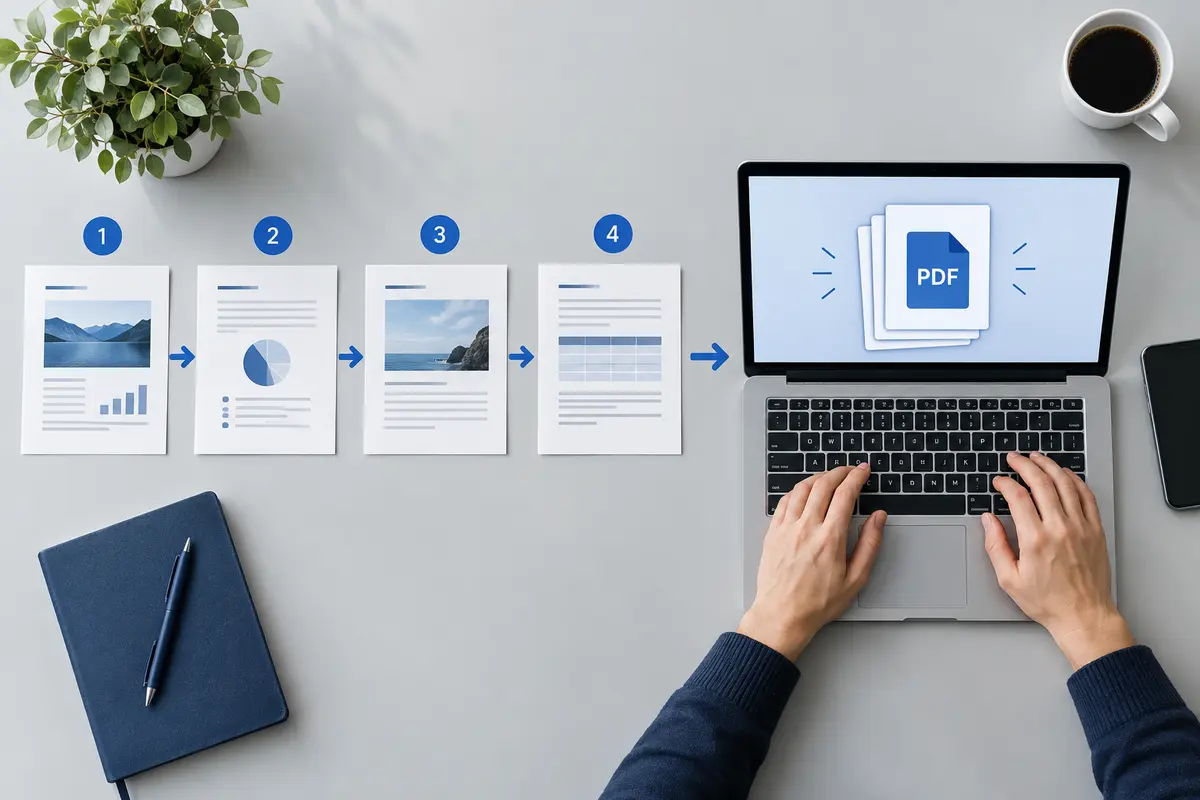
Does merging reduce quality?
A merge that copies original PDF pages should not rasterize them or reduce image resolution. Selectable text and embedded page content normally remain as they were in the source files.
The combined file may be larger because it contains all source pages. If a size limit applies, finish the merge and review it first, then create a separate compressed copy.
Check the final document
Open the download and move through every page. Confirm the cover, section transitions, attachments and final page. Search for a known phrase when searchable text matters, and test bookmarks or links if the source files used them.
Keep the individual source PDFs until the recipient accepts the combined file. They make corrections much easier if one section must be replaced later.