PDF compression guide
How to Compress a PDF Without Losing Readability
PDF compression is a tradeoff between file size and page detail. The right setting depends on whether the document contains photos, scans, small text, diagrams or mostly digital text.
Published September 13, 2026 · Practical guidance from ToolsFA
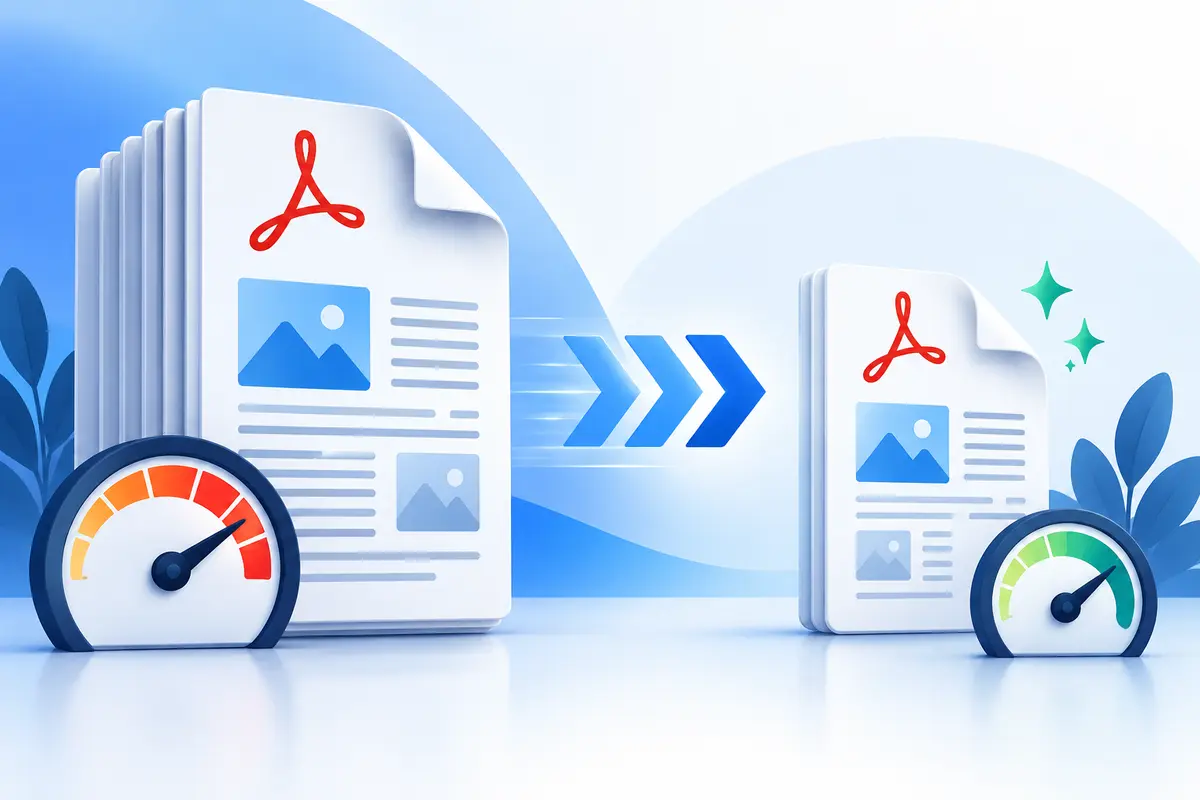
Suggested first compression check by document type
| Document type | Main risk | What to inspect |
|---|---|---|
| Photo portfolio | Visible JPEG artifacts | Faces, gradients and detailed textures |
| Scanned forms | Soft or broken small text | Fine print, checkboxes and signatures |
| Technical drawing | Thin lines disappear | Dimensions, legends and line weights |
| Text report | Flattened links or selectable text | Search, links and copy behavior |
| Application upload | Missing exact size limit | Final bytes and every required page |
On smaller screens, swipe horizontally to see every column.
Why PDF file sizes vary
Two PDFs with the same page count can have very different sizes. High-resolution scans and photographs use far more storage than ordinary text and vector shapes. Embedded fonts, duplicate images and editing history can also increase size.
A file that is already optimized may have little room to shrink. Rebuilding pages at lower image quality can reduce it further, but that may flatten searchable text, links, forms and annotations.
Choose a realistic target
Use a target-size range when a website or email service has a clear limit. Otherwise, begin with a moderate percentage reduction rather than immediately choosing the strongest setting.
A target is not always reachable without unacceptable quality loss. If the source contains dense scans or large photographs, compare more than one result and keep the clearest version that satisfies the upload requirement.
- Check the final size rather than the requested target alone.
- Zoom into small text and thin lines.
- Confirm that all pages are present and upright.
- Keep the original PDF unchanged.
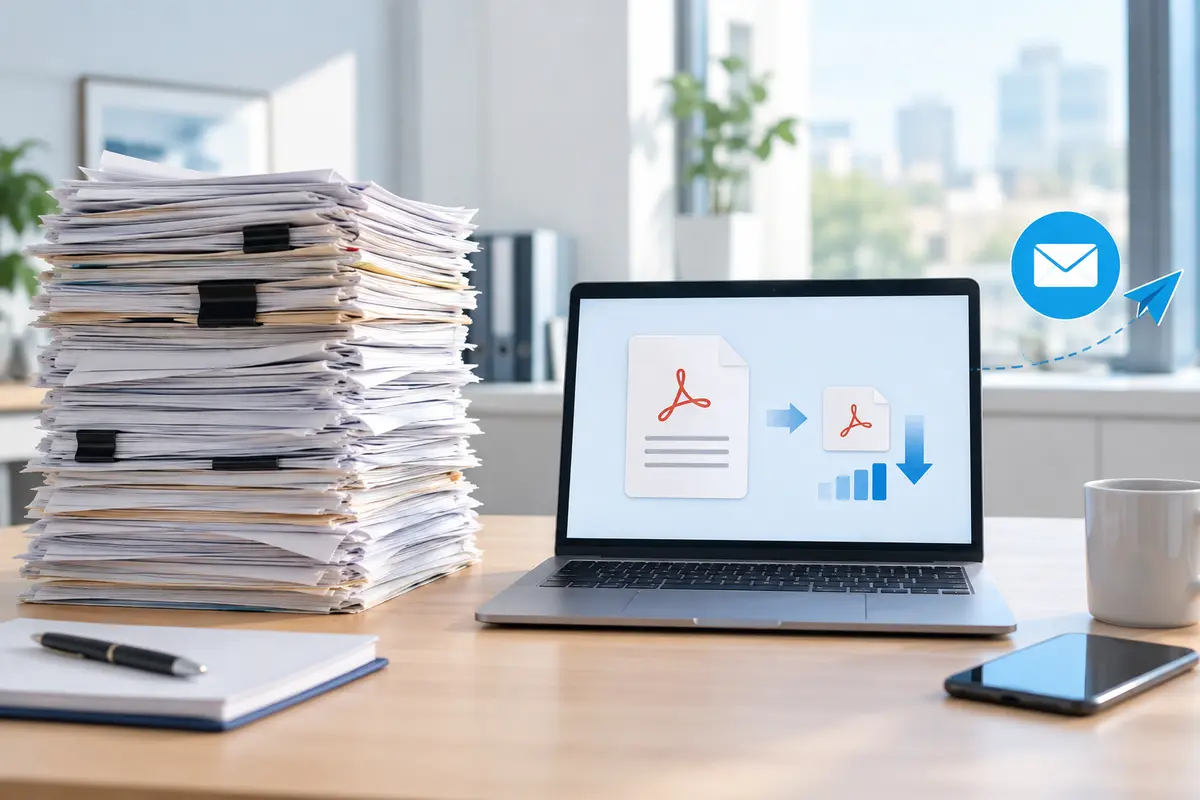
What quality loss looks like
Over-compressed text may look fuzzy, broken or surrounded by halos. Photographs may show blocks in smooth areas, while diagrams may lose fine lines or small labels. These problems are easier to see at 100% or 200% zoom than in a thumbnail.
Print a test page when the file will be printed. A document that looks acceptable on a phone can still produce weak fine text on paper.
When compression is the wrong tool
If the file is large because it contains unnecessary pages, remove or split those pages before compressing. If it contains several separate documents, consider reorganizing or merging only the pages the recipient actually needs.
For forms, accessibility-tagged documents or digitally signed PDFs, verify whether flattening would remove required interactive or trust features before proceeding.
Important: Compression should create a new copy. Never replace your only original until the result has been reviewed.