PDF to Word guide
How to Convert PDF to Word Without Losing Formatting
A PDF stores a finished page, while Word stores editable content that can reflow. A good conversion therefore starts by deciding what matters more: matching the page closely or making every paragraph easy to rewrite.
Published September 13, 2026 · Practical guidance from ToolsFA
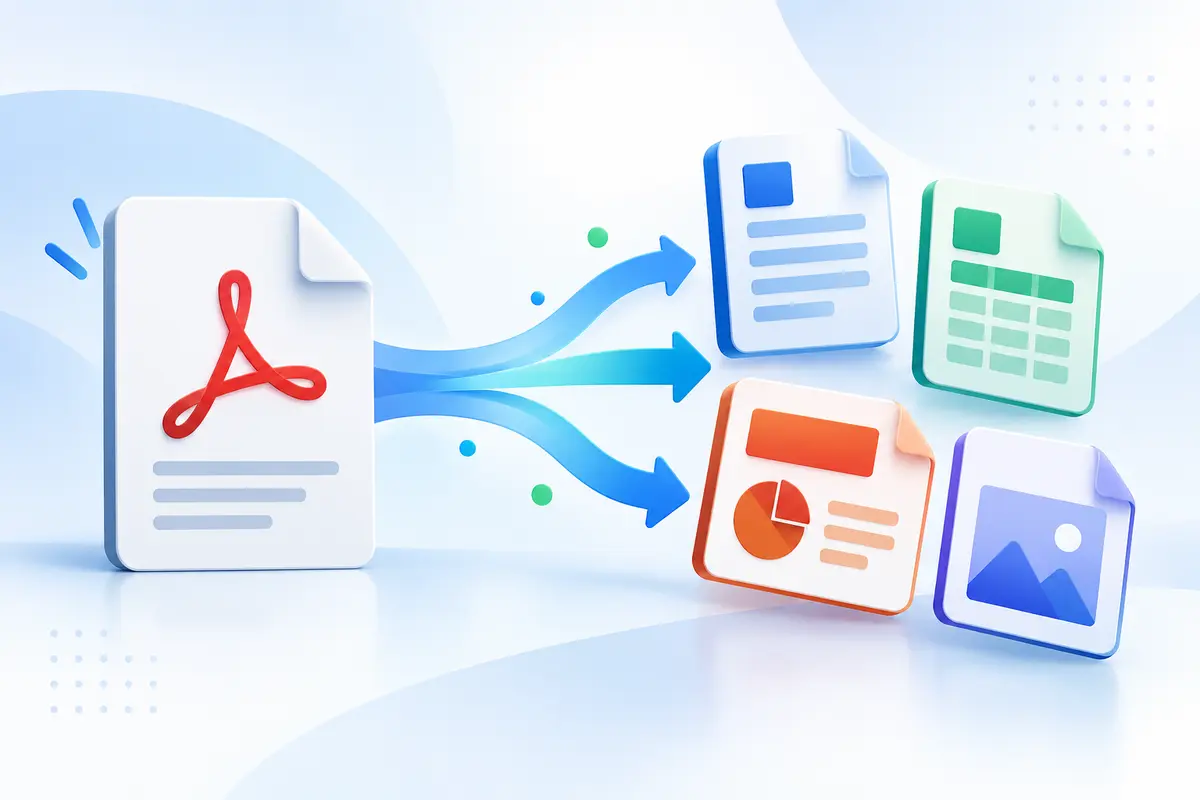
Which PDF-to-Word method should you choose?
| Document type | Best starting mode | Check after conversion |
|---|---|---|
| Certificate or designed one-page form | Match layout + edit | Banners, logos, signatures, colors and text boxes |
| Resume with columns | Match layout + edit | Column alignment, bullets and section rules |
| Simple report or letter | Editable text | Paragraph order, headings and page breaks |
| Scanned document | OCR / editable text | Names, numbers, punctuation and reading order |
| Table-heavy statement | Try layout mode first | Rows, columns and whether Excel is more suitable |
On smaller screens, swipe horizontally to see every column.
Why a PDF does not behave like a Word file
PDF pages are positioned like finished printouts. A heading may be stored at a precise coordinate, a logo may be a separate image, and a table may consist of lines plus individually placed words. Word normally expects paragraphs, tables and sections that can move when text changes.
That difference explains why a converter cannot promise both perfect visual matching and completely natural reflow for every file. The most reliable result preserves the page artwork while rebuilding selectable text as editable Word text.
Preserve fonts, colors and page artwork
Check more than the words. Compare font size, weight, color, alignment, bullets, borders, background banners, logos and signatures. If a required font is not installed on the computer, Word may substitute another font and slightly change line length.
For a layout-preserving document, click several text areas to confirm they are editable. Decorative artwork may remain as a background graphic so that the page stays visually faithful without duplicating the visible text.
- Keep the original PDF beside the Word file while reviewing.
- Check every page at 100% zoom.
- Confirm that red, white and other font colors remain editable.
- Save a new copy before making major layout changes.
When OCR is necessary
If you cannot select words in the PDF, the page may be a scan. OCR estimates letters from pixels before Word content can be created. Clear, straight, high-resolution scans usually perform better than blurred photographs, handwriting or pages with strong shadows.
OCR output must be proofread. Pay special attention to names, dates, decimal points, account numbers, accented characters and narrow table columns.
Important: OCR creates an editable starting point; it does not certify that every recognized character is correct.
A practical quality-check routine
First compare the top and bottom of every page, because headers, footers and page numbers are easy to miss. Then review headings, lists, tables and image placement. Finally, click representative text from different areas and make a small edit to confirm that it behaves as expected.
If a complex document still needs substantial cleanup, consider keeping the visually matched version for reference and using the editable-text version only for copying or rewriting content.